
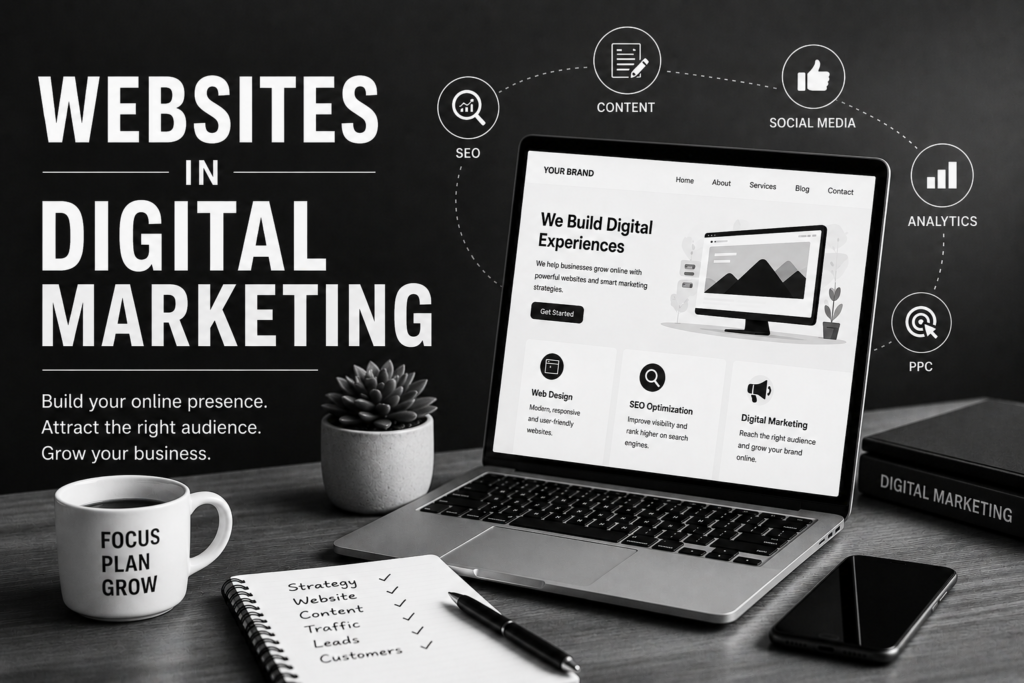
In today’s digital world, having a strong online presence is no longer optional—it’s essential. Whether you’re a startup, a local business, or an established brand, your website serves as the heart of your digital marketing strategy. While social media platforms help attract attention, a website is where potential customers learn about your business, build trust, and take action. A professionally designed website can significantly improve your brand’s credibility, generate leads, and increase conversions.
Your Website: The Digital Face of Your Business
Your website is often the first impression customers have of your business. A clean, modern, and user-friendly design creates confidence and encourages visitors to explore your products or services. An outdated or poorly designed website, on the other hand, can drive potential customers away within seconds.
A well-structured website should clearly communicate your brand identity, showcase your offerings, and provide an easy navigation experience. Fast loading speed, mobile responsiveness, and clear call-to-action buttons are all essential features that improve user satisfaction.
How Websites Support Digital Marketing
Every digital marketing effort eventually leads users back to your website. Whether visitors arrive through social media, search engines, email campaigns, or paid advertisements, your website acts as the destination where conversions happen.
Search Engine Optimization (SEO) helps your website appear in search results when customers look for relevant products or services. High-quality content, optimized pages, and a responsive design improve your search rankings and increase organic traffic. Additionally, integrating analytics tools allows businesses to track visitor behavior, measure campaign performance, and make data-driven marketing decisions.
Turning Visitors into Customers
A successful website does more than attract visitors—it converts them into customers. Strategic landing pages, engaging content, customer testimonials, contact forms, and clear calls to action encourage users to take the next step. Whether it’s making a purchase, booking a consultation, or requesting more information, every page should guide visitors toward a specific goal.
Regular updates, fresh blog content, and optimized user experiences also help maintain customer engagement while improving search engine visibility.
Conclusion
A professional website is the foundation of every successful digital marketing strategy. It strengthens your brand, builds trust, supports SEO efforts, and serves as the central hub for all marketing activities. Investing in a well-designed, high-performing website is one of the smartest decisions a business can make to achieve long-term online growth. As digital competition continues to grow, businesses with effective websites will be better positioned to attract customers, generate leads, and build lasting relationships in the online marketplace.