
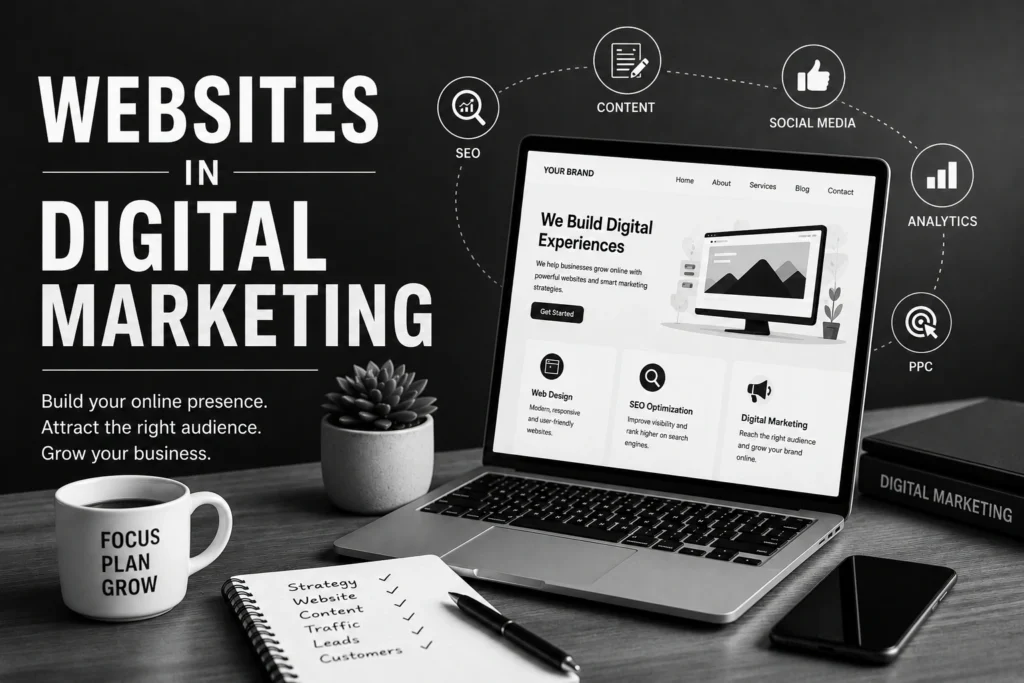
In today’s digital world, having a strong online appearance is very important for businesses of all sizes. Whether you’re a new startup, a local business, or a well-known brand, a website is a key place where customers can learn about your business, understand what you offer, and take action.
Social media can capture attention, and search engines can bring people to your brand. But the website is often where visitors decide if they can trust you. A professional website can help build trust, support marketing efforts, create new leads, and support long-term business growth.
Why Is a Website Important for a Business?
A website is important because it gives a business its own digital space to build credibility, share its value, and connect with potential customers.
People often visit a website first when looking for information about a business.
A clean design, clear information, professional branding, and an easy-to-use layout can make a good first impression.
On the other hand, an old website, a confusing layout, or missing information can make visitors doubt whether the business is trustworthy.
A professional website should help users understand who you are, what you offer, and how to get started.
How Does a Website Support Digital Marketing?
A website supports digital marketing by being the main place where traffic from different channels leads to.
Visitors might find a business through Google, Instagram, LinkedIn, email, ads, or other platforms.
These platforms can grab attention, but the website is where visitors can learn more and possibly become customers.
This makes the website a key part of the overall marketing process.
Instead of relying completely on outside platforms, businesses have more control over their website, content, branding, and customer experience.
What Makes a Website Professional?
A professional website combines good design with ease of use, fast performance, clear messaging, and a smooth experience for customers.
Design is important, but looks alone don’t make a website effective.
A strong website should be:
Easy to navigate
Works well on mobile devices
Loads quickly
Looks consistent with the brand
Easy to read
Secure and kept up to date
Includes clear calls to action
Visitors should be able to find what they need without confusion or extra steps.
Good design should make it easier for users to do what the business wants them to do.
How Does a Website Help With SEO?
A well-optimized website gives a strong base for search engine optimization and helps businesses attract useful organic traffic.
SEO helps search engines understand a website and connect it with the right searches.
Businesses can improve SEO through good content, relevant keywords, clear page titles, clear website structure, internal links, and a good user experience.
A mobile-friendly website is especially important, as many people use their phones to access websites.
When site performance and useful content work together, a website can be a valuable source of long-term traffic.
How Can a Website Convert Visitors into Customers?
A website converts visitors by guiding them toward clear actions that match the business’s goals.
Just having many visitors doesn’t always mean business growth.
Visitors need a clear path to take the next step.
Good websites use things like call-to-action buttons, landing pages, contact forms, product info, testimonials, and clear descriptions to encourage visitors to take action.
For example, a service provider might guide visitors to book a consultation, while an online store might encourage them to look at products and make a purchase.
Why Are Analytics Important for Websites?
Website analytics help businesses understand how visitors behave and check if their digital marketing is working.
Analytics can show where visitors come from, what pages they look at, how long they stay, and where they leave.
Businesses can use these insights to find problems and improve their marketing strategy.
For example, if an ad brings a lot of traffic but very few people fill out a contact form, the landing page might need changes.
Frequently Asked Questions
1. Is a website necessary for every business?
A website is highly valuable for most businesses because it provides a professional online presence and gives customers a reliable place to find information. The exact features required depend on the business model and target audience.
2. Can a website improve a brand’s credibility?
Yes, a professional and well-maintained website can strengthen brand credibility. Clear information, professional design, testimonials, contact details, and consistent branding can help visitors feel more confident about a business.
3. How does a website help generate leads?
A website can generate leads through contact forms, landing pages, booking systems, newsletter sign-ups, and clear calls to action. These elements make it easier for interested visitors to connect with a business.
4. Does website design affect SEO?
Yes, website design can influence SEO indirectly and directly through factors such as mobile usability, site structure, page experience, and accessibility. However, good design should work alongside valuable content and strong technical SEO.
5. Should a business regularly update its website?
Yes, regularly updating a website helps keep information accurate, improve user experience, and maintain relevant content. Businesses should review important pages, update outdated information, and publish useful content when appropriate.
Conclusion
A professional website is more than just an online version of a business card. It is a vital part of a digital marketing strategy that connects different aspects of the business, builds trust, attracts the right audience, and encourages visitors to take action.
By using good design, informative content, SEO techniques, clear calls to action, and making improvements based on data, businesses can make their websites powerful tools for growth. In today’s competitive online environment, a website shouldn’t just exist it should actively support the business’s marketing efforts and enhance the customer experience.