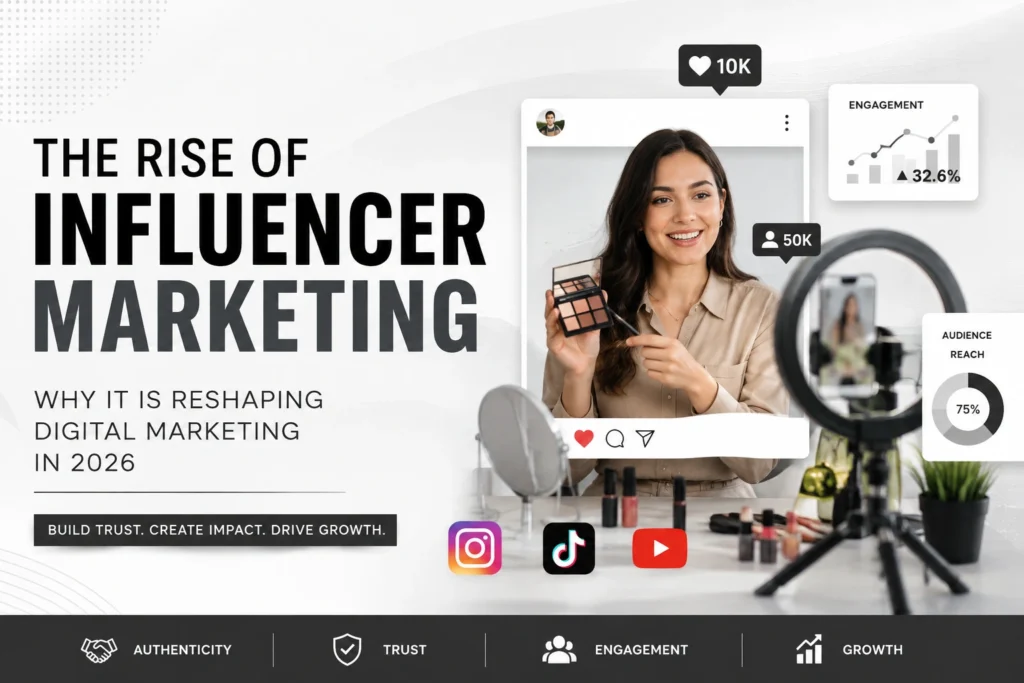
Influencer marketing is becoming a big part of how companies reach audiences online.
Instead of relying on traditional ads, businesses are now partnering with people who create content that their target audience enjoys and trusts.
This shift is happening because people today trust recommendations from others more than they trust ads from brands.
As a result, influencer marketing has become a regular part of how companies operate.
In this blog, we will explore what influencer marketing is, why it is so popular, the advantages it offers, the challenges businesses face, and how companies can create successful influencer marketing campaigns in 2026.
What Is Influencer Marketing?
Influencer marketing involves companies working with individuals who create content to promote products or services to a specific group of people.
Unlike traditional advertising, influencer marketing is based on trust and authenticity.
These content creators have built a following, and when they recommend something, their audience is more likely to believe them.Whether it’s a beauty influencer talking about skincare or a fitness influencer discussing workout gear, working with influencers helps companies connect with people in a more personal way.
Platforms like Instagram, YouTube, TikTok, Facebook, and LinkedIn have made it easier for companies to collaborate with influencers.
Businesses of all sizes use influencers to increase visibility, generate leads, and boost engagement.
Influencers often share personal experiences, tutorials, or reviews, which help people make informed decisions about what to buy.
Why Has Influencer Marketing Become So Popular?
Influencer marketing is popular because people trust recommendations from individuals more than traditional advertisements.
Today, people are exposed to a lot of ads online, which has made them less responsive to conventional marketing.
Influencers fill this gap by creating content that feels more personal and genuine.
There are several reasons why influencer marketing has grown so quickly:
- People spend more time on social media than ever before.
- Real recommendations help build trust.
- Companies can target specific groups of people more effectively.
- Social media platforms favor content created by creators.
- Influencers engage audiences through comments, shares, and conversations.
This approach not only boosts brand awareness but also helps companies build meaningful relationships with potential customers.
What Are the Different Types of Influencers?
Influencers are categorized based on the size of their following, and each type is suitable for different marketing goals.
Nano Influencers have a small but highly engaged following.
They are seen as relatable rather than celebrities, making them ideal for local businesses and niche brands.
Micro Influencers have a moderate following and high engagement.
They are often preferred by companies because of their strong connection with their audience and affordable collaboration costs.
Macro Influencers have a larger following and are typically chosen by bigger brands looking to increase awareness in wider markets.
Mega Influencers have a massive following and include celebrities or well-known internet figures. Although they offer broad reach, working with them can be costly and may not always lead to high engagement compared to smaller influencers.
The choice of influencer depends on the campaign’s goals, budget, target audience, and expected return on investment.
How Do Brands Choose the Right Influencers?
Successful influencer marketing campaigns begin with selecting creators whose audience matches the company’s target market.
Many companies make the mistake of choosing influencers based on the number of followers they have, but a successful campaign depends on more than just popularity.
Businesses should consider the following:
- Who their target audience is
- How engaged their audience is
- The quality of the content they produce
- The company’s brand values
- The influencers’ past collaborations
- How authentic and real they are
- How consistent they are in posting
An influencer with 20,000 engaged followers can be more effective than someone with one million inactive followers.
Building long-term partnerships also builds trust with the audience, which is more powerful than one-time sponsored posts.
How Does Influencer Marketing Benefit Businesses?
Influencer marketing helps companies increase visibility, build credibility, and improve customer engagement.
When influencers genuinely recommend products, their followers are more likely to trust the brand and consider making a purchase.
This creates a marketing experience that feels informative rather than pushy.
Some major benefits include:
- Increased brand awareness
- Higher audience engagement
- Greater customer trust
- Better lead generation
- Increased website traffic
- Stronger social proof
- Improved conversion rates
- Better return on marketing investment
Companies also gain access to user-generated content, which can be used across websites, ads, and social media platforms.
What Challenges Do Brands Face in Influencer Marketing?
Despite the many advantages of influencer marketing, there are challenges that require careful planning.
As influencer marketing continues to grow, companies must ensure collaborations remain authentic and transparent.
Choosing the wrong influencer or ignoring campaign performance can damage a company’s reputation.
Some common challenges include:
- Fake followers and artificial engagement
- Choosing influencers who don’t align with the target audience
- High collaboration costs
- Difficulty in measuring campaign success
- Changing social media algorithms
- Maintaining authenticity in sponsored content
To overcome these challenges, companies should evaluate influencer performance using analytics rather than relying solely on the number of followers.
Best Practices for Successful Influencer Marketing
Companies can enhance the success of their campaigns by following these proven best practices:
- Define campaign objectives clearly.
- Choose influencers based on audience alignment, not just popularity.
- Encourage storytelling rather than scripted promotions.
- Build long-term relationships with creators.
- Track campaign performance using key metrics.
- Follow advertising disclosure guidelines.
- Combine influencer marketing with SEO, content marketing, and social media strategies.
Successful influencer marketing is built on trust, consistency, and meaningful collaboration, rather than one-time promotional efforts.
What Is the Future of Influencer Marketing?
The future of influencer marketing will focus on authenticity, data-driven insights, and long-term creator relationships.
Companies are increasingly working with nano influencers because of their strong audience connections and higher engagement rates. AI-powered tools are also helping businesses identify influencers, measure campaign performance, and predict audience behavior.
Trends like live shopping, user-generated content, virtual influencers, and personalized campaigns are shaping the future of influencer marketing. However being real will remain the foundation of influencer marketing regardless of technological advancements.
Conclusion
Influencer marketing has changed the way companies communicate with people in 2026. Of just using traditional ads companies are now building trust through meaningful collaborations with creators who genuinely connect with their audiences. From increasing brand awareness and improving engagement to generating sales and strengthening customer relationships influencer marketing offers advantages for companies of every size.
As the online landscape continues to evolve companies that prioritize being transparent and building long-term partnerships will achieve the greatest success. By selecting the influencers creating valuable content and measuring campaign performance effectively companies can build lasting relationships, with customers and remain competitive in the ever-changing world of digital marketing.
Frequently Asked Questions (FAQs)
- What is influencer marketing?
Influencer marketing is a strategy where brands collaborate with content creators to promote products or services to their audience.
- Which type of influencer is best for small businesses?
Micro and nano influencers are often the best choice because they have highly engaged audiences and are more cost-effective.
- Is influencer marketing better than traditional advertising?
Both have their strengths, but influencer marketing often generates higher trust and engagement because recommendations come from familiar creators.
- How can businesses measure influencer marketing success?
Businesses can track engagement, website traffic, conversions, reach, impressions, and return on investment (ROI).
- Will AI replace human influencers?
No. AI can support campaign planning and analytics, but human creators remain valuable because of their authenticity, creativity, and personal connection with audiences.